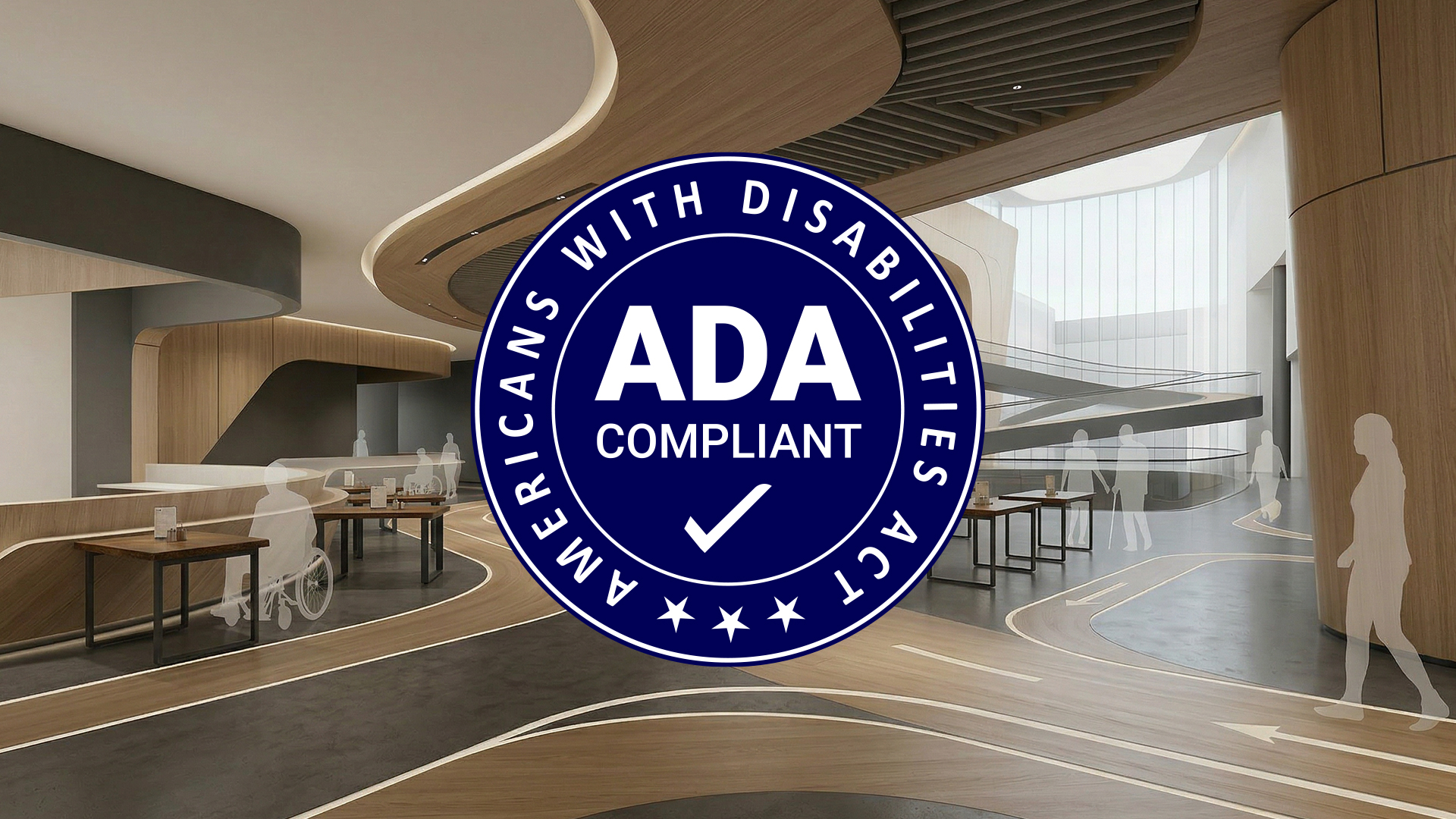
Accessible dining environments should feel welcoming, functional, and visually cohesive — and with the right commercial foodservice furniture selections, restaurants can meet ADA requirements without compromising design. Thoughtfully specified restaurant seating and commercial dining tables allow operators to create inclusive dining spaces that support both accessibility and brand aesthetics.
ADA Requirements That Shape Furniture Selection
ADA dining guidelines recommend:
- Dining surface height between 28″–34″
- 27″ minimum knee clearance height, 30″ width, 19″ depth
- 30″ × 48″ clear floor space for wheelchair access
- 36″ accessible routes
- Accessible seating distributed throughout the dining room
These specifications make proper base design, table sizing, and layout planning essential when selecting tables and seating for modern dining environments.
ADA Requirements for Outdoor Dining Areas
ADA accessibility requirements apply to outdoor restaurant seating areas as well, including patios, sidewalk cafés, rooftop dining spaces, and other exterior dining environments. These areas must provide accessible routes connecting the site arrival point (such as parking, public sidewalk, or building entrance), compliant table clearances, and properly distributed accessible seating locations.
Outdoor dining areas should include:
- An accessible route at least 36 inches wide connecting the building entrance to the outdoor seating area and maintaining required accessible pedestrian clearance where sidewalk seating is used
- Firm, stable, and slip-resistant ground surfaces such as concrete, pavers, or properly installed decking
- Dining tables that meet the same ADA dimensional requirements, including 28″–34″ table height and required knee clearance
- Accessible seating locations distributed throughout the patio, rather than grouped in a single section
- Adequate maneuvering space that allows wheelchair users to approach and position at tables comfortably
Weather-resistant end-bases, properly anchored tables, and durable outdoor furniture systems help operators maintain accessibility compliance while ensuring long-term performance.
BFM Solutions That Support Accessible Dining
BFM Seating offers a wide range of hospitality furniture solutions designed to help operators meet accessibility standards while maintaining a unified aesthetic across the dining room.
Bolt-down and clearance-friendly bases
Products such as Uptown End Bases, Urban Loop, Atlas A-Frame, Elite End Bases, and the Alpha Bolt-Down Base provide open legroom configurations that support ADA-appropriate knee clearance while delivering the durability required in demanding commercial environments.
ADA-friendly table configurations
BFM bolt-down and end-base tables paired with ADA-appropriate tabletop sizes — including 30″ × 48″ and larger formats — allow restaurants to create accessible seating areas that integrate seamlessly with surrounding layouts. Coordinated indoor and outdoor table programs, including end-base options such as Elite and Bali and other dining-height table systems, make compliant planning simple for restaurant operators and hospitality designers.
ADA Considerations for Restaurant Seating
While ADA standards provide specific dimensional requirements for accessible dining tables, there are no mandated ADA design specifications for the chairs themselves in restaurant dining areas. Instead, accessibility is achieved through proper table clearances, accessible routes, and flexible seating layouts that allow wheelchair users to position themselves comfortably at dining surfaces.
Restaurants should ensure that seating can be easily moved to provide the required 30″ × 48″ clear floor space, and that accessible tables are distributed throughout the dining room rather than grouped in a single location. Many operators also choose stable, easy-to-move chairs with supportive seat heights to improve comfort and usability for a wide range of guests, supporting inclusive design goals even where specific ADA chair measurements are not required.
ADA Considerations for Bar and Counter Seating
When food or beverage service is provided at bar or counter seating, at least 5% of seating spaces at counters or bars (minimum one) must be accessible. Accessible counter surfaces must be no higher than 34 inches and provide the required knee clearance (27″ high, 30″ wide, 19″ deep) along with a 30″ × 48″ clear floor space for forward approach.
Restaurants typically meet this requirement by incorporating a lowered section of the bar counter or an adjacent accessible counter surface integrated within the bar area, ensuring guests using mobility devices can enjoy the same service areas and social dining experiences as other patrons.
Accessibility That Enhances the Guest Experience
When accessible tables are thoughtfully distributed throughout the dining space and paired with coordinated restaurant seating collections, finishes, and tabletop designs, operators create environments that feel intentional rather than modified. BFM Seating’s integrated furniture solutions allow restaurants to meet ADA accessibility requirements while delivering the elevated, design-driven dining environments today’s guests expect.
Inclusive design is more than compliance — it is an opportunity to expand guest comfort, improve operational flexibility, and create welcoming dining spaces that serve every customer with style.
ADA guidelines referenced reflect the 2010 ADA Standards for Accessible Design. Local building codes and municipal accessibility requirements may vary; designers and operators should verify final compliance with applicable authorities having jurisdiction (AHJ).
For more insights into BFM Seating’s inclusive design furniture solutions, please click here or call us at 215-289-5411.