Restaurant design has always borrowed from the past. Whether it is the warmth of classic wood seating, the familiar shape of a cross-back chair, the texture of cane, or the character of industrial metal finishes, vintage-inspired furniture brings a sense of history and comfort to a dining space.
But today’s hospitality interiors are not simply recreating old-world cafés or traditional taverns. They are blending heritage details with cleaner layouts, modern materials, and contemporary expectations for durability, flexibility, and performance.
That balance is what makes the heritage-meets-modern approach so appealing. It gives restaurants, cafés, bars, and hospitality spaces a design story without making the environment feel dated. The result is a space that feels familiar, thoughtfully designed, and built for today’s pace of service.
Why Vintage-Inspired Restaurant Furniture Still Works
Vintage-inspired furniture has lasting appeal because it creates an immediate sense of place. Wood chairs, cane backs, cross backs, slat backs, upholstered silhouettes, and industrial metal frames all carry visual references that guests recognize. These elements can make a new restaurant feel established, comfortable, and welcoming from the moment someone walks in.
For operators and designers, furniture is not just a functional purchase; it helps define the personality of the space. Vintage-inspired elements soften the room and add character, texture, and warmth.
BFM Seating collections such as Emma Cane, Henry Cross Back, Memphis, Barrick, Chester, and Madison bring heritage-inspired details into commercial dining environments in different ways. Some lean warm and traditional, others feel more industrial or mid-century, but each can help create a space with character while supporting the durability needs of foodservice use.
Keeping Your Restaurant’s Look Current
The difference between “vintage-inspired” and “outdated” usually comes down to restraint. A few heritage cues can add charm and depth. Too many competing period details can make the space feel themed.
Modern restaurant interiors often succeed by mixing classic shapes with simplified color palettes and durable commercial materials. A wood chair with a traditional silhouette may feel more current when finished in black, natural wood, or warm neutral tones. A cane-back detail can feel fresh when paired with sleek tabletops and contemporary metal bases. Industrial-style seating can be softened with wood accents, upholstery, or warm lighting.
For example, Emma Cane offers the familiar texture of cane in a clean, mid-century-inspired form, making it a strong fit for boutique restaurants, cafés, hotel dining spaces, and elevated casual concepts. Paired with a simple tabletop and modern base, the look feels warm and current rather than overly nostalgic.
Materials Make the Difference
In commercial dining environments, furniture needs to do more than look good. It has to hold up to daily use, repeated cleaning, frequent movement, and heavy guest traffic. That is where today’s vintage-inspired commercial furniture differs from true antique or residential-style pieces.
Modern commercial furniture can deliver the look of heritage design while using stronger construction methods and more practical materials. Powder-coated steel frames, European beechwood, commercial-grade upholstery, synthetic cane, durable laminates, reinforced joinery, and wood or wood-look finishes all help create furniture that fits the design vision while meeting the demands of foodservice use.
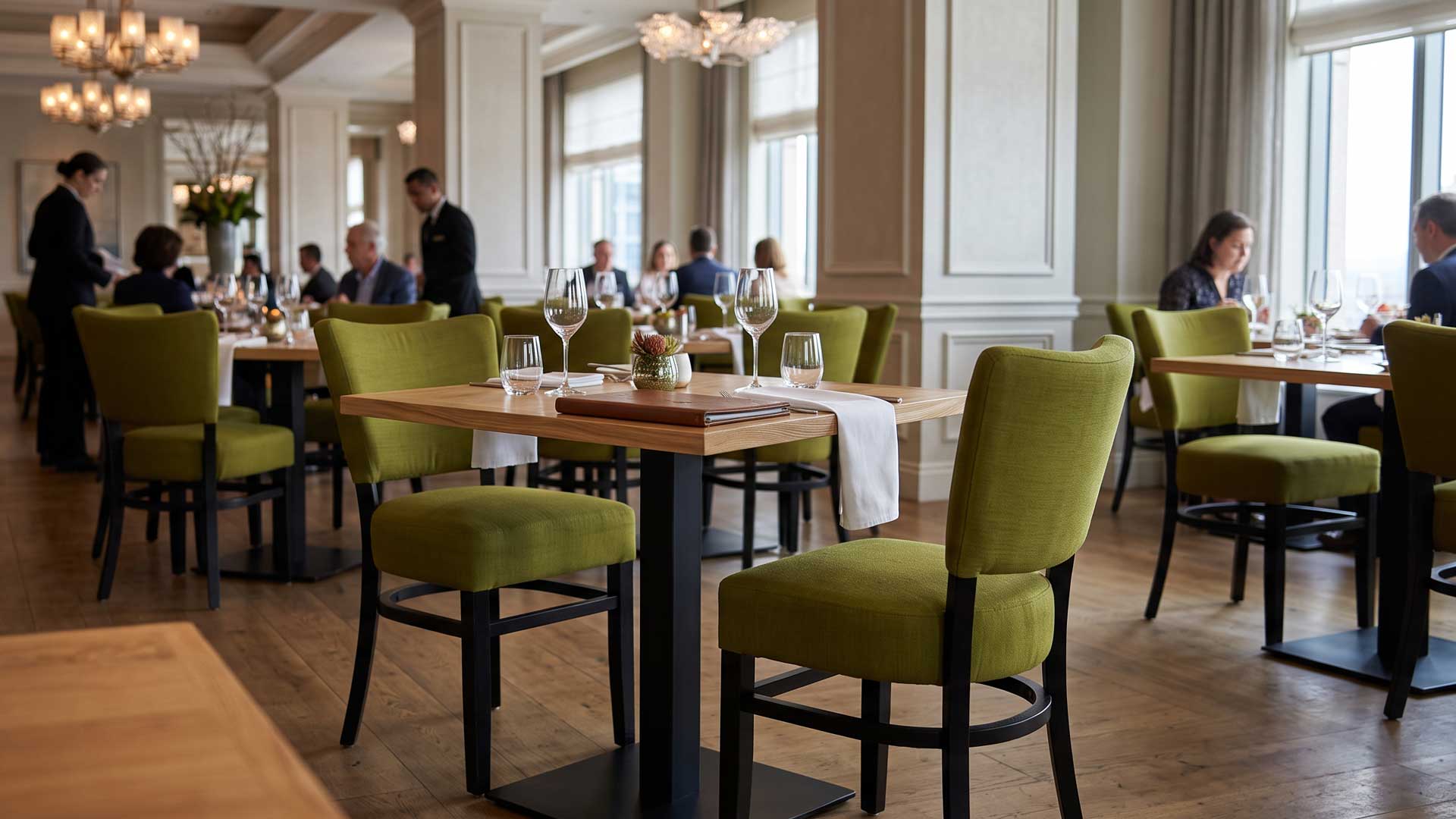
BFM’s Henry Cross Back seating captures a classic restaurant silhouette while offering the consistency and reliability needed for commercial projects. Memphis brings an industrial-modern feel with metal framing and wood seat and back options, while Barrick combines wood and steel elements for a look that feels both structured and warm.
Mixing Old and New Restaurant Furniture Styles
One of the easiest ways to blend heritage and modern design is through contrast. A traditional wood chair can be paired with a sleek tabletop. A classic upholstered seat can sit alongside a minimalist table base. A familiar cross-back or slat-back silhouette can be placed in a space with contemporary flooring, modern wall finishes, and updated lighting.
The goal is not to match every element. In fact, the most interesting spaces often come from a controlled mix. Warm wood tones can balance black metal. Upholstered seating can soften concrete or exposed brick. Classic forms can bring personality to clean architectural spaces.
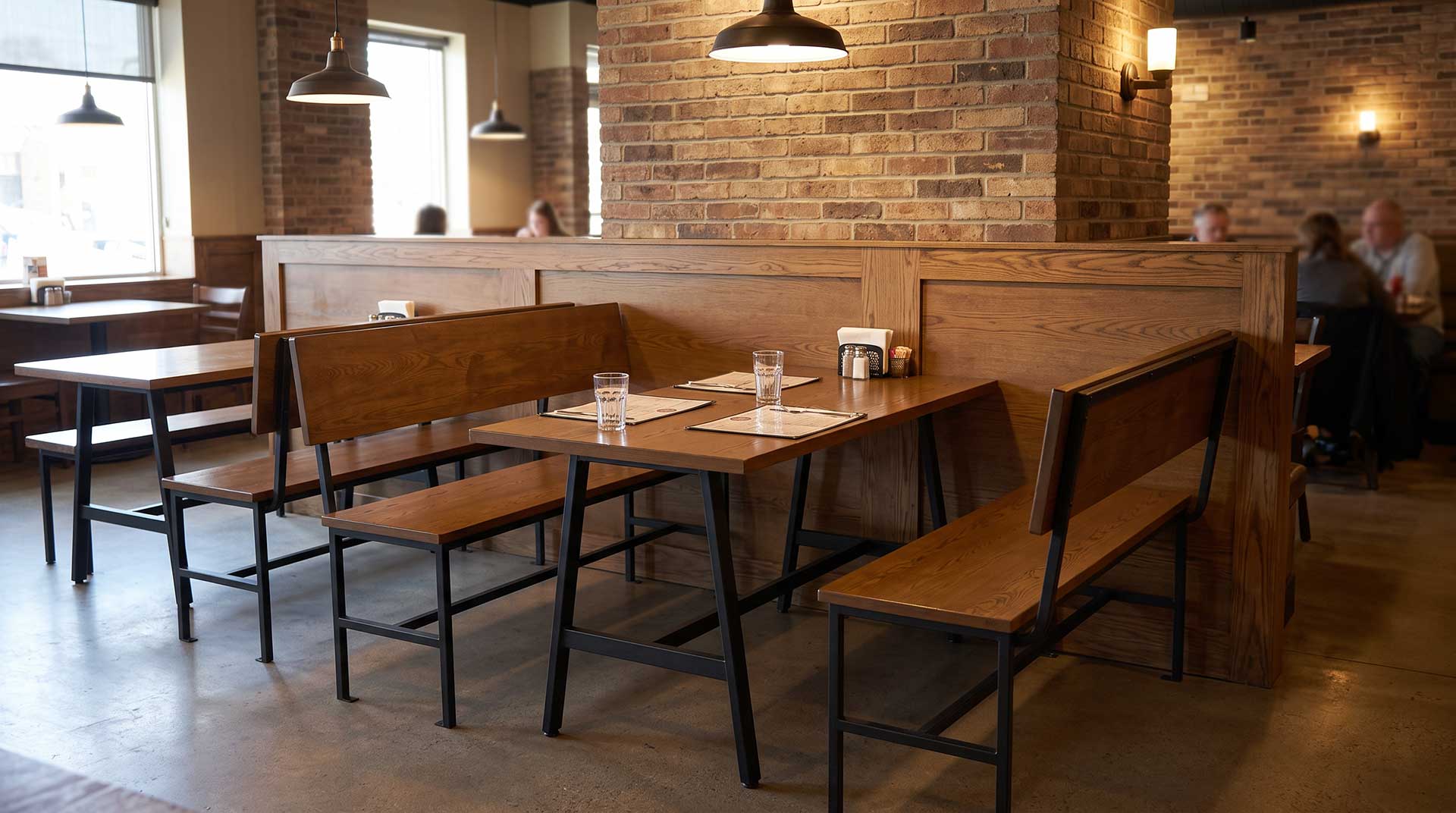
Collections like Madison work especially well in this type of setting. With its fully upholstered profile, Madison can add comfort and polish to modern dining rooms while still carrying a timeless, hospitality-friendly look. For a more urban or industrial concept, Chester can be paired with Relic tabletops to create a cohesive environment with strong visual character.
Beyond Restaurant Chairs
Seating is often the most visible part of the furniture package, but the heritage-meets-modern look can also carry through tabletops, bases, barstools, benches, and service-area pieces.
BFM’s Relic, Veneer, and Midtown tabletops are good examples of how tabletop choices can support this design direction. Relic offers a rustic, reclaimed-inspired look that works well with industrial seating and casual dining concepts. Veneer brings a warmer, more refined wood appearance for restaurants that want a classic dining room feel. Midtown offers a more contemporary textured laminate surface that can balance traditional seating with a cleaner, updated table presentation.
Table bases can also shift the overall feel of a space. A clean base such as Uptown, Jaxon, or Urban can keep a heritage-inspired seating package from feeling too traditional.
Designed for Longevity
Trends come and go, but restaurants benefit from interiors that can age well. That is one of the biggest advantages of blending heritage influences with modern restraint. Classic shapes and familiar materials tend to have staying power. When they are paired with clean lines and practical finishes, the result feels current without becoming too trend-dependent.
That sense of longevity is especially meaningful as BFM Seating celebrates 30 years of serving the restaurant and hospitality industry. Since 1996, dining spaces have changed in countless ways, but the need for welcoming, durable, attractive commercial furniture has remained constant.
Final Thoughts
Blending vintage-inspired furniture with contemporary restaurant design is about balance. Heritage details bring warmth, character, and familiarity. Modern materials, clean layouts, and commercial construction bring durability, flexibility, and long-term performance.
As BFM celebrates 30 years in business and the country looks toward America’s 250th anniversary, the heritage-meets-modern approach feels especially relevant. It reflects the best of both worlds: respect for the past, practical solutions for the present, and flexible design that can continue serving hospitality spaces for years to come.
When done well, the result is a dining space that feels both established and fresh — a place with personality, comfort, and practical value for daily foodservice use.
For more insights into BFM Seating’s restaurant furniture solutions, please click here or call us at 215-289-5411.