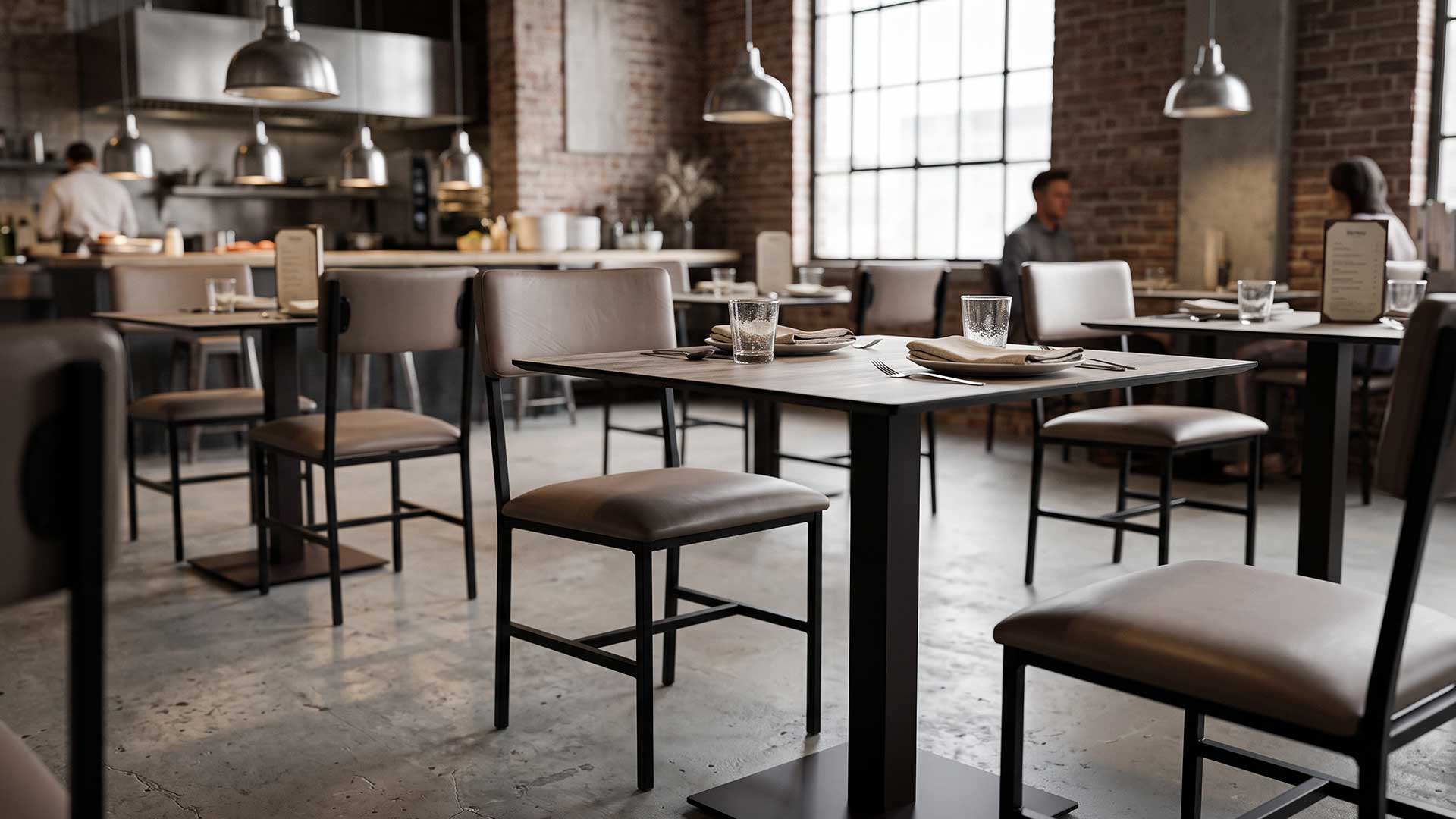
When designing a restaurant, appearance often takes center stage. But even the most beautiful dining space can fall short if guests aren’t comfortable in their seats. The right commercial restaurant seating should do more than complement the décor. It should support good posture, encourage relaxation, and contribute to an enjoyable dining experience.
From seat depth and backrest angles to upholstery and construction materials, ergonomics plays an important role in selecting comfortable restaurant chairs and barstools. Understanding these elements can help restaurant operators and designers create spaces where guests feel welcome from the first course to the last.
Seat Depth: Finding the Right Balance
Seat depth is one of the most important considerations in restaurant chair ergonomics. A seat that’s too shallow may provide insufficient thigh support, while one that’s too deep can make it difficult for shorter guests to sit comfortably against the backrest.
The ideal seat depth allows guests to sit back with adequate leg support without placing unnecessary pressure behind the knees.
BFM Seating offers a variety of commercial dining chairs to accommodate different seating preferences and restaurant environments. For example, the Hamilton Side Chair features a 16.5-inch seat depth, while the Bristol Side Chair offers a 17-inch seat depth with upholstered seating.
These differences may seem small, but chair dimensions, cushioning, and overall design work together to influence how comfortable guests feel throughout their visit.
Backrest Design: Supporting Natural Posture
A well-designed backrest is essential to ergonomic restaurant seating. The angle and shape of the chair back influence how naturally guests can sit upright, relax between courses, and maintain comfortable support.
Dining chairs generally benefit from a relatively upright backrest that supports the lower back while allowing guests to lean forward comfortably when eating. A slight recline can provide additional relaxation without creating the overly laid-back position better suited to lounge furniture.
BFM’s Bristol Seating Collection features gently contoured upholstered seats and supportive backs, combining contemporary style with everyday dining comfort.
For hospitality spaces seeking another upholstered option, the Meghan Collection offers padded seats and backs with streamlined welded steel frames. Available in chairs, barstools, and counter-height stool configurations, the collection makes it easy to carry a cohesive design throughout different dining areas.
Materials and Upholstery: Comfort Meets Durability
The materials used in restaurant seating affect more than appearance. Seat construction, cushioning, and upholstery all contribute to the overall seating experience.
Wood seating offers warmth and classic appeal, while contoured wood seats and backs can provide a comfortable, supportive shape. Upholstered seating introduces additional cushioning and allows designers to create a softer, more inviting dining environment.
For restaurants expecting guests to enjoy leisurely meals, upholstered commercial chairs are often worth considering.
BFM’s Madison Seating Collection combines traditional wood-frame styling with upholstered seats and backs, making it an attractive option for restaurants, hotels, and upscale dining environments.
Upholstery selection also plays a role in long-term performance. BFM offers commercial vinyl options in Grades 2, 3, and 4, providing varying levels of abrasion resistance, cleanability, and design flexibility.
For high-traffic environments, selecting the appropriate upholstery can help seating maintain its appearance while providing the cushioning guests appreciate.
Seat Height and Foot Support: The Often-Overlooked Details
Even a beautifully designed chair can become uncomfortable when its height doesn’t coordinate with the dining table.
Proper seat height allows guests to position their legs comfortably beneath the table, with adequate knee clearance and room to move naturally.
Bar and counter seating require additional consideration. Because guests’ feet may not reach the floor, a properly positioned footrest becomes particularly important for comfortable seated posture.
When specifying commercial restaurant barstools, designers should evaluate seat height, footrest placement, back support, and the relationship between the stool and the dining surface.
BFM offers coordinating chairs, counter-height stools, and barstools in collections such as Hamilton and Meghan, allowing operators to maintain a consistent aesthetic across multiple seating heights.
Designing for Comfort Without Sacrificing Space
Comfortable seating doesn’t necessarily mean oversized furniture. The goal is to create an appropriate balance between guest comfort, available floor space, and operational efficiency.
A compact café may benefit from supportive chairs with streamlined profiles, while a full-service restaurant or hotel dining room may prioritize generously upholstered seating for longer visits.
Consider these factors when choosing restaurant furniture:
- Seat dimensions: Accommodate a range of guests without sacrificing usable dining space.
- Back support: Select backrests that promote comfortable dining posture.
- Upholstery: Match cushioning, durability, and cleanability to the restaurant’s needs.
- Table compatibility: Coordinate chair and table heights to provide comfortable legroom.
- Layout: Allow sufficient clearance for guests and staff to move safely and comfortably.
The most successful restaurant seating plans consider the entire dining environment rather than evaluating each chair independently.
Comfortable Guests. Better Dining Experiences.
Great restaurant design engages the senses, but lasting comfort is what helps make an experience truly enjoyable.
Thoughtfully selected ergonomic restaurant chairs and barstools can help guests feel more relaxed, encourage comfortable conversation, and support the atmosphere a restaurant wants to create.
At BFM Seating, we understand that commercial furniture must balance aesthetics, comfort, durability, and functionality. From contoured wood seating to customizable upholstered chairs, our collections offer solutions for a wide range of restaurant and hospitality environments.
Explore our commercial restaurant seating collections and discover how thoughtful furniture selection can make every seat a better experience.
Frequently Asked Questions About Restaurant Seating Ergonomics
What makes a restaurant chair ergonomic?
An ergonomic restaurant chair supports comfortable sitting posture through appropriate seat depth, seat height, backrest design, and materials. It should allow guests to sit naturally without unnecessary pressure on their legs or back.
How deep should a restaurant chair seat be?
Many restaurant dining chairs have seat depths around 16 to 18 inches, although the ideal dimension depends on chair design and the guests using it. The goal is to support the thighs while allowing comfortable contact with the backrest.
Are upholstered restaurant chairs more comfortable?
Upholstered chairs can provide additional cushioning and pressure relief, particularly during longer meals. However, overall comfort also depends on seat firmness, back support, dimensions, and proper table height.
For more insights into BFM Seating’s restaurant seating solutions, please click here or call us at 215-289-5411.